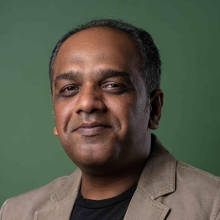
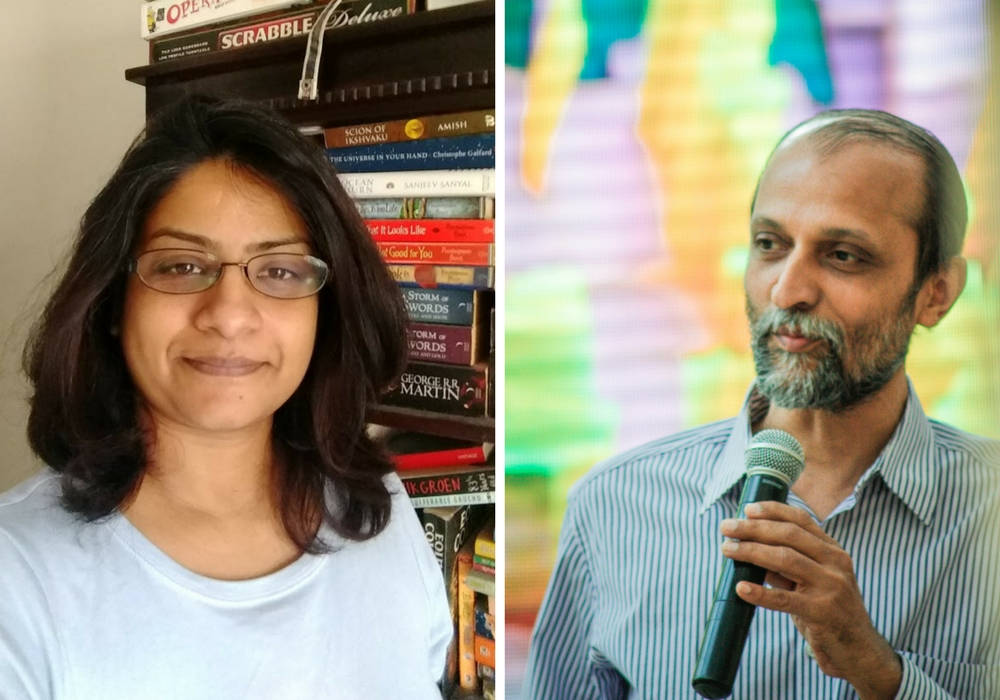
[Gayatri Jayaraman and Ajit Ranade. Photograph of Ranade by BMW Guggenheim Lab (CC BY-NC-ND 2.0) via Flickr (cropped from original)]
They are young, educated, and have good jobs. Yet they find themselves in the grip of debt and on the edge of poverty.
Gayatri Jayaraman narrated their stories in her book Who Me, Poor? (We carried as extract from the book—you can read it here.)
But are these just stories of misguided people making poor choices? Or is it a symptom of a changing India that policy makers ought to pay closer attention to? How do these stories fit into the larger India story? After all, this is an undocumented phenomenon—no data exists; just these real stories as anecdotal evidence.
To understand what might be going on here, we invited Ajit Ranade to be a part of this conversation with the author. Ranade, who is chief economist at the Aditya Birla Group, is an economist and political analyst of global consequence.
Listen in for a worm’s eye view and a bird’s eye view to get a more holistic picture of the India story:
- Are the millennials an entitled generation? Or is this so-called sense of entitlement simply a sign of evolution and maturing markets?
- With the community support structure for migrants vanishing, what role can a more enlightened urban planning policy play in providing certain public goods?
- For that matter, how do policy makers look at issues?
- Are there parallels from other parts of the world that indicate that this might be a wider phenomena—an anomaly between free migration for jobs and lack of resources like access to affordable housing near the place of work?
- And why all this churn is actually a story of entrepreneurial opportunities.